
The Odonan Core region is the oldest and most established space in the Odonan Empire, and consists of the home system of Odona and the first planets that the Odonans settled once they moved into space. The Odonan-occupied planets in the core were all settled by the Kroosians and adapted to Odonan biology by them. The Odonans, once they first began to explore space, were puzzled at why the biology of all of these planets was a subset of the biology of their own world, and why the planets were covered in ruins that were all similar in style and age. Eventually, they realized that the Kroosians were in fact their ancestors (this fact was not known or accepted at this time) and that the Odonans were expanding into space that the Kroosians once occupied. In the early days of Odonan star travel, they did not use tam-ulk-yr for the warp converters since those crystals were too rare and too valuable for such a use, so the distances travelled were limited. In the beginning, voyages to the nearby worlds were risky, took upto several months and did not always succeed. In the present era, of course, the core regions of Odonan space are firmly held, and travel between the core worlds is measured in days, not months.
Babushka
The planet Babushka is a single F6-class star with a small star system. The third planet is class-M, and consists of mostly small islands and land masses located on a planet-wide ocean. The planet is quite hot, so the majority of life exists towards the polar regions. This is where the Babushkans live. This is a semi-sentient humanoid species notable for being covered in a fine fur that comes in a variety of bright colours, to go along with the vibrant colours of the vegetation on this lush world. The Babushkans are roughly equivalent in intelligence to australopithecus afari, and have basic tools and agricultural skills. They even have a rudimentary language, but communicate with each other primarily though touch and gestures. The Babushkans are known for their sexual sense, and the pheromones that they release are one of the few alien pheromones known to affect Odonans. The Odonans themselves use the planet as a vacation world, with the main Odonan establishments located on land masses not occupied by the native Babushkans, although contact between the two groups is extensive. Had the Odonans found Babushka in a more recent era, with a firmer grasp on non-interference directives and the like, they would have left the planet alone, but in the minds of the Odonans, "what is done is done."
Chaki
The Chaki system orbits a relatively cool G8-class star. The system consists of just three planets, two of which are class-M. Chaki I, also called just Chaki, is a normal class-M world extensively terraformed for Odonan biology by the Kroosians. It is home to over two billion people. The second planet, Elkahn (Chaki II) had terraforming started by the Kroosians, and finished by the Odonans. Over 130 million Odonans live on that planet. The third planet is Earth-sized but covered with a heavy nitrogen-carbon dioxide atmosphere (class-K). It also has a narrow ring system. The Kroosians built an extensive penal colony on that planet, and the Odonans used it at first before developing their own penal colony on a more distant world. What were once penal colonies on Senkeekh (Chaki III) are now used by the Odonan space service as top-secret and secure research facilities. The most important aspect of Chaki is that it is home to the Odonan Empire's primary military shipbuilding facility and is also the headquarters of the Odonan Space Service, the Empire's equivalent to Starfleet. The facility, located in a Trojan position in Chaki's orbit, sixty degrees ahead of it, is one of the largest and most impressive free-space installations in the Known Galaxy, with maintenance berths for one hundred starships, and construction berths for fifty, along with the associated network of manufacturing installations, administration and training. A population of almost five million lives on the Naval Yards installation. Because of the presence of the naval yards and other sensitive research facilities, access to the Chaki system is controlled. Because Chaki itself is heavily populated, non-Odonans are allowed into the system, but they can only come on an Odonan starship.
Juniae
The Juniae system was the third system settled by the Odonans as they moved into space. The star is an F9-class star, and the system has ten planets in a wide variety. Only one, Juniae itself (Juni to the locals) is class-M, and is home to around 630 million Odonans. This planet was heavily settled by the Kroosians, and their ruins are extensive. The Odonans established new cities and left the old cities as historical monuments, especially since the old Kroosian cities show extensive signs of having been attacked and destroyed. Kroosian mining activities are found all over the system as well, and on the sixth planet, Jellonem, a dark, rocky world, the Odonans found a Kroosian ship graveyard. Although the Odonans learned a lot about Kroosian starship technology at Jellonem, the ships themselves were in such poor repair that none were operational any longer. Modern Juniae contains a starbase and a minor repair and maintenance facility, and was the main starship construction yards before the development of the operations at Chaki. Juniae itself is primarily an agricultural planet.
Mandu
The Mandu star system consists of two stars, Mand A and Mand B, and these two stars orbit each other relatively closely. However, Mand B is a small red dwarf and so does not adversely affect the planets in the Mand A system, except to restrict their number. Mand A is a class F3 yellowish-white star, and so is quite hot. The original class-M planet, Mandu itself, was settled by the Kroosians, and this was also the second planet settled by the Odonans outside of their system. However, because the planet is so hot, the Odonans went ahead and terraformed the fourth planet in the system, which was named Mandona. Both planets are heavily populated, with 1.4 billion on Mandu and 1.7 on Mandona. The fifth planet, Kishysin, is an active terraforming project by the Odonans and is classified as a colony world. Mandona in particular is home to many of the artistic, literary and cultural groups in the Odonan Empire, and the society is called an "intellectual and artistic" one. Mandu contains many ruins from the era of the Kroosian Empire, but Mandona is pristine and is a lush, green world. Despite a year that is over four hundred days long, the climate is very moderate, with no polar ice caps or substantial glaciers, but the planet is known for its wicked hurricanes.
Odona
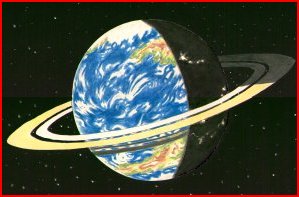 The Odonan homeworld is a rather unique planet, since it is one of the few class-M planets with a substantial ring system; in fact, the Odonans believe that the rings around their planet are more substantial and brighter than the rings around any other known class-M world. The rings consist mostly of fine stones, which have been eroded to smoothness by the constant jostling of the ring particles. The stones are kept in position by a number of shephard moons, none larger than five kilometres in diameter, that move through the ring system. The Oduni system (the star is named Oduni) is a double-star system, but the second star is a class-M5 red dwarf that orbits a substanial distance from the main star (taking 25,000 years to complete one orbit) and does not interfere with the planets around Oduni A. The main star is a class-G1 star, slightly hotter and brighter than Earth's sun. The system consists of eleven planets, of which only Odona is class M. Before the Odonans discovered interstellar space flight and started settling on other planets, the population became quite large, approaching seven billion at its peak, and since about a quarter of the planet's surface is covered in ice caps or consists of uninhabitable highland regions, the high density of the population had led to a serious environmental degradation. As the Odonan Empire grew, the population of Odona actually shrank, down to around 840 million. Much of the planet was restored to its original condition, with extensive forest and grassland areas between the cities, and around the abandoned ruins of the old cities. The primary function of the planet in modern times is administration, as it is the capital world of the Empire. The planet has a network of orbiting satellites and starbases, and is home to a substantial fleet of ships to protect it against outside attack. The capital city, Odonas, is home to about twelve million people, and is the site where the survivors from Kroos first settled almost twenty-six millennia ago. The Odonans began their year-numbering system from that moment, so at the current time (Earth year 2376), the Odonan year is 25,441 (although in practice, the Odonans use only the last three digits when referring to the year, with the millennium understood).
Orbiting the gas giant planet Orvitron is Kroos, the ancestral homeworld of the Odonans and the planet where the Odonans actually evolved and originated. The planet is now a class-I world, with a thick atmosphere of carbon dioxide and nitrogen, and with extensive clouds of dust hiding the surface of the planet. The average temperature is -40º. It is hard to believe that this world was once class-M, but it was barely so when the Kroosians evolved on it. Their activities eventually led to a catastrophic environmental change and degradation that forced the survivors to find a new world to settle on, Odona. Originally, Odona was too hot and the ultraviolet radiation levels too high for Kroosian lifeforms to exist, but the survivors of the original settlers, with a little genetic manipulation, did survive and prosper on Odona. Nowadays, Kroos has a resident population of 500, mostly archaeologists and their support workers, as they evacuate and learn more about the Kroosians and their spectacular capital, Abakasadar.
Permica
Permica was the first star system settled by the Odonans. The Kroosians had been there before, but they did not find the planet too suitable to their needs. They had adapted it to Kroosian-Odonan biology but had not extensively settled on it. The star is a relatively cool class-G9 star, and Permica orbits as one of the five planets in the system with a rather short year. One of the mysteries of this system is the huge gap between the third and fourth planet, a huge expanse of space where one normally finds gas giant planets. There are none in the Permica system, and nobody can explain why or what might have happened to gas giant planets in the system. Permica itself is a relatively lush world, with an extensive flora derived from Kroos, most of which were unknown to the Odonans. One advantage was that on Permica, the Odonans found a whole range of new and interesting foodstuffs. The planet is currently home to just under 700 million Odonans, mostly living in small settlements. Evidence of early widespread Odonan industrial activity on Permica remains. The planet also had some dilithium resources, and the discovery and exploitation of these greatly enhanced early Odonan starflight capabilities. Originally, Permica was called "Odona 2," but in time, the Odonans adapted the Kroosian names for the systems and the planets.
Vokar
The claim to fame in this system is that Vokar III became the administrative capital of the Kroosian Empire simply because the environment on Kroos itself could not support the extensive activities that the capital world of an interstellar empire required. Kroos in fact was already in decline when the decision was made to terraform Vokar III and build the extensive network of cities and infrastructure that still exists on that planet. Kroosian designers envisioned a planet-wide city connected by the pinnacle of technology, but the planet never quite reached those levels. A colony of about 125,000 now exists on this planet, and their primary occupation is to maintain all the historical sites. There is actually a movement in the Odonan Empire that suggests that the Odonan capital world should be located at Vokar, thus allowing Odona itself to remain in a more pristine condition. However, the costs of such a move would be prohibitive, and so have not been seriously considered.
The Odonan core contains a number of non-Odonan systems. Two systems, Ngatree and Rema-Tagret, are planets occupied by non-Odonan humanoids but their societies are not advanced enough for warp travel. Ngatree is approximately equivalent to mid-seventeenth century Earth, but a powerful religion has stagnated its society. Rema-Tagret is roughly equivalent to twelfth-century Earth, but several severe planet-wide pandemics have held back that culture. Odonans recognize space inside a one-light year volume around these stars as non-Odonan and do not approach. They maintain no anthropological teams on those planets because they are too primitive.
Also within the core of the Empire are two warp-capable civilizations, the Erolians and the Jochun. The Erolians are a felinoid-humanoid society whose warp converters are limited to hyperhydrogen, and so the range and speed of their ships is very limited. They have established two colonies on nearby worlds. Although aware of the Odonans, contact is limited because the Odonans worry about the effect on Erolian society should the Erolians learn that they are in the centre of a large and powerful interstellar empire, thus limiting their expansion opportunities. The Jochun are a humanoid race known for their short stature, average height being 1.2 m, and the green, scaly skin that they have. Although clearly animals, the Jochun skin has limited pigmentation that allows for some photosynthesis to occur. Their planet occupies a hot F7 system, and orbits close enough to the sun that the Jochun find temperatures in the 35-50º range to be very comfortable. They too have interstellar-flight capability, and have contact with the Odonans. Because the Jochun society is very rigid with rigid population controls, colonies are not needed, but the Jochun does maintain some mining operations on nearby worlds.
Thysporia
Thysporia is a very interesting world. The planet is a hot, class-M world orbiting a hot F4-class star in close orbit. The inhabitants are not indigenous to the world, but are in fact Kroosians. Unlike other Kroosian survivor groups, however, the Thysporians are immune to the overhimpenyon disease that has ravished other Kroosian survivor groups found by the Odonans. The reason for this is that many speculate that Thysporia became a dumping ground for criminals and social malcontents and other undesirables. The population lives in settlements over the northern continent, and they are quite primitive. The leading cause of death on Thysporia remains skin cancer, and the average lifespan is just fourty to fourty-five years. Genetic change has proceeded to the point where the Thysporians have been classified as a separate species, enough that overhimpenyon does not affect them. Nevertheless, it is speculated that Odonans and Thysporians are similar enough that they can still interbreed, but nobody has ever attempted this. Thysporia is now classified as a planet protected by the non-interference directive, and the Odonans maintain some anthropological teams on the planet. The Thysporians' most noted characteristic is, of course, that they are a society completely without the concept of clothing.
Demoria
The world of Demoria is a class-M world in orbit around a G4-class star. It is the homeworld to the Demorians, a humanoid race with several distinguishing characteristics, including having skin covered with a fine, downy brown fur to go along with long, rough-looking head hair, and an opposable little finger along with an opposable thumb. Demorian babies are also born with a small tail, but this disappears as the baby grows. The Odonans have been long aware of Demoria, and have studied the advancing culture on the planet, along with the rising population that approached twelve billion at its peak, along with resource depletion and environmental degradation that goes along with such a high population. The Demorians realized, once the principles of faster-than-light flight became known to their physicists, that their destiny was to head to the stars and settle other worlds and off-load some of their population. This drive helped unify the Demorian culture and eventually led to a faster-than-light starship, although it was not fast and looked rather ungainly. At the same time, their scientists had determined that around a nearby star existed a planet that might be suitable for settlement. The only problem was that planet was Permica. Once the Demorians were in space, they encountered the Odonans, and learned two bitter truths. One was that the Odonans were there first and that Demoria was embedded deep in the Odonan Empire, and the second was that Permica was already occupied and that all the other nearby planets were accounted for. The Odonans tried to accommodate the Demorians. Some entered the Odonan space service, and even had distinguished records, and the Odonans provided assistance to establishing colonies that were some distance away. However, the truths of interstellar politics led to a deterioration of Demorian society, as they realized they could never match the Odonans in strength-nor be allowed to. This deterioration led to some terrorist acts committed by the Demorians, and the rise of a movement that suggested the Demorians should travel to Permica in force, massacre the Odonans there and settle on the planet. They even demanded the "right" to do this from the Odonans. In response, the Odonans ordered all Demorians out of their space (and off their ships) and blockaded Demoria. A fleet of ships continues to maintain this blockade, in effect for over fifty years now. Little is known of the current state of Demoria since the Odonans block all access, but it is not good.
Return to the Odonan Empire Core Map.
Return to the Map Index.
Return to the Star Trek: Athena Home Page.
(c) 1999 by White Tornado Publishing, all rights reserved. "Star Trek" is a trademark property of Paramount Pictures, and commercial use of this property is prohibited. "Star Trek: Athena" is a non-commerical hobby site created for the entertainment of the site creator and visitors to the site. Trademark infringement is not intended. White Tornado Publishing claims copyright to all things Odonan, including the details on this map and the text contained here.
